
Technical guide · Termite protection
Treated for the Giant Northern Termite
Our LVL and plywood are glue-line treated to Hazard Class H2 under AS/NZS 1604. That is the level Australia requires in its tropical north, home of Mastotermes darwiniensis, the country's most destructive termite. Every product carries a 25-year termite warranty from Koppers Performance Chemicals.
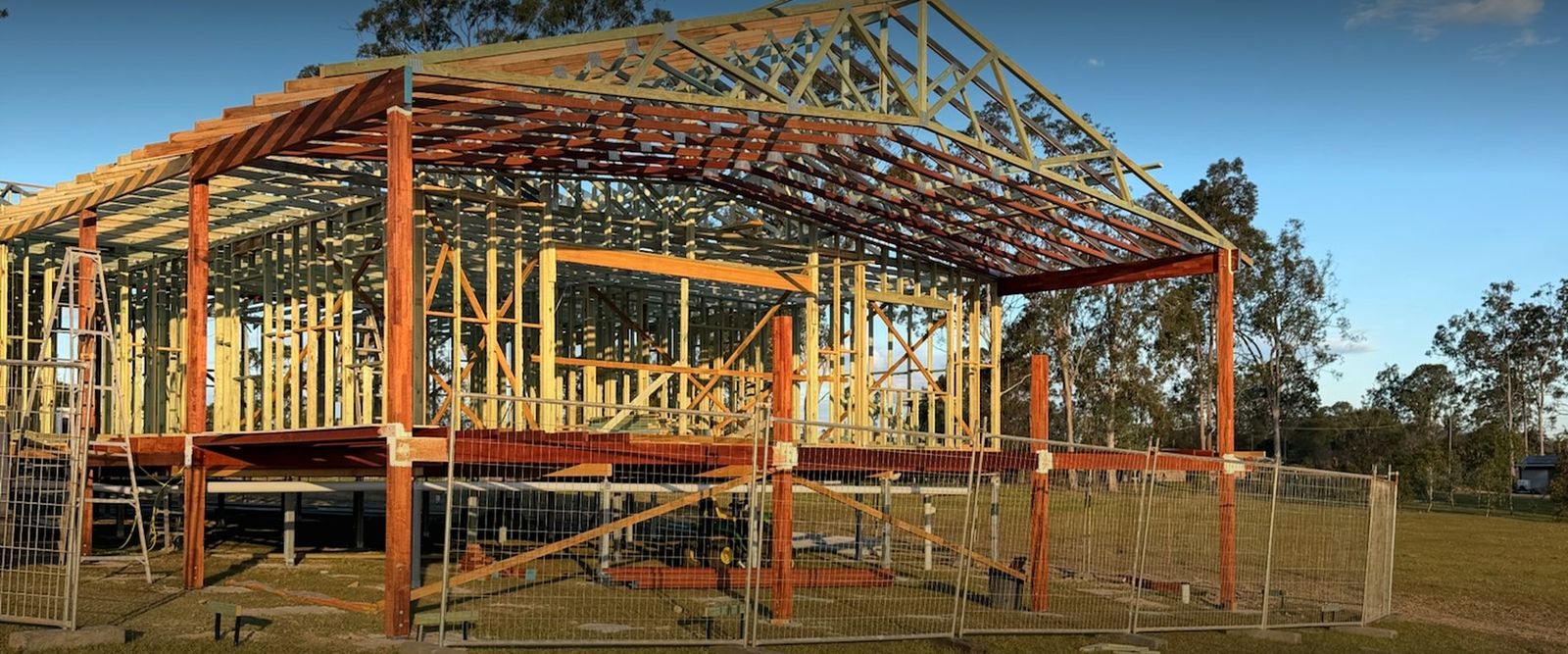
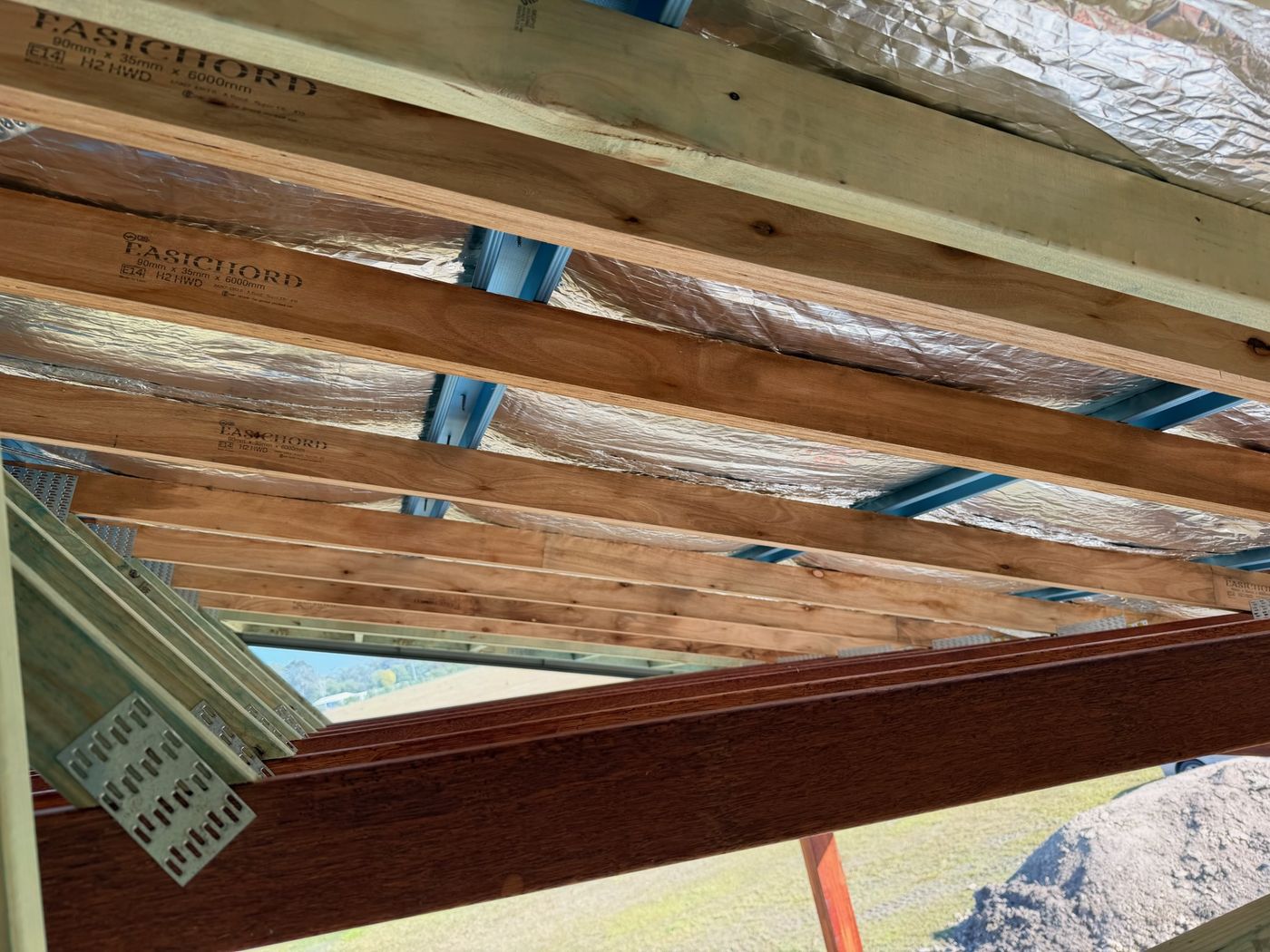
Photo: EasiChord LVL roof framing on a building site in Australia
Home / Technical guides / Termite protection
The threat
The termite that eats almost anything
Mastotermes darwiniensis is the most primitive termite alive today, the only surviving member of its family and often called a living fossil. It lives across tropical northern Australia, including the Northern Territory's Top End.
It is regarded as Australia's most destructive termite. Its colonies can grow past a million insects, and it attacks timber in buildings, fences, poles, living trees and crops. It has even been recorded chewing through plastic cable sheathing to reach the wood behind.
That is why Australia's preservation standard treats the tropical north differently. South of the Tropic of Capricorn, a lighter treatment (H2S) is allowed. North of it, framing must meet full H2.
Same distance from the equator
Vientiane and Bangkok sit as close to the equator as Darwin and Cairns: inside the zone where Australia requires full H2 protection.
23.4°
Scale: 0° to 45° from the equator. Thai and Lao cities above the bar, Australian cities below.
The proving ground
The Northern Territory doesn't do mild
Our certified LVL is supplied into Australia's Top End, one of the harshest environments on Earth for a timber building. If a product meets the Australian standard there, it is ready for Thailand, Laos and the wider Mekong region.
- Monsoon rain. Darwin averages more than 1.7 metres of rain a year, almost all of it in a six-month wet season.
- Heat and humidity. Sustained tropical heat and humid wet seasons put moisture and temperature cycles on every building component.
- Cyclones. Darwin is designed as a cyclonic wind region; Cyclone Tracy destroyed most of the city in 1974.
- Mastotermes. The Giant Northern Termite is active across the region.
How it works
Protection built into every glue line
We don't spray the surface. The termiticide goes into the glue itself, so it sits between every veneer through the full thickness of the beam or panel.
Because every glue line carries the treatment, cutting an LVL beam to length on site doesn't expose an untreated core.
We use bifenthrin from Koppers Performance Chemicals, measured into each glue batch and recorded. Phenolic resin is strongly alkaline and can weaken the termiticide, so our dosing compensates for it. That is the kind of detail our quality program is built on.
Dose
Bifenthrin is measured into every glue batch, and the dose is logged in the glue-mixing record.
Spread
The treated glue is rolled onto each veneer at a controlled, checked spread rate.
Press
Hot pressing at around 180 °C cures the phenolic bond and locks the treatment into every glue line.
Test
Every production batch is tested in our in-house lab before it is released.
The standard
Hazard classes under AS/NZS 1604
Australia and New Zealand grade treated timber by where it will be used. Our products are treated to H2: inside, above ground and protected from wetting, anywhere in Australia.
| Class | Exposure | Biological hazard | PML products as supplied |
|---|---|---|---|
| H1 | Inside, above ground, fully protected and ventilated | Lyctid borers | Covered |
| H2 Ours | Inside, above ground, protected from wetting, all of Australia | Borers and termites | Treated to this class |
| H2S | As H2, south of the Tropic of Capricorn only | Borers and termites | Covered |
| H3 | Outside, above ground, periodic wetting | Decay, borers and termites | Not suitable without extra treatment |
| H4–H6 | In-ground, fresh-water or marine exposure | Severe decay, marine borers | Not suitable |
H2 glue-line treatment protects against termites and borers. It gives no protection against fungal decay, so our products are for interior, dry use. Exterior or weather-exposed use needs H3 treatment, coating and edge sealing by others. See our technical note on exterior use and storage.
The warranty
25 years, backed by Koppers
Our H2 glue-line treated LVL and plywood carry a 25-year termite warranty from Koppers Performance Chemicals, the global wood-treatment company that supplies our termiticide. The warranty is contractual between PML and Koppers, so the protection is backed by the chemical's maker, not just by us.
Ask us for the warranty conditions for your project.
In the field
On real building sites in Australia
Not a concept. EasiChord LVL, made in Laos and listed on our BSI certificate, framing real roofs and carrying real loads.
Every production batch is rigorously tested in our in-house lab
- Bending stiffness & strengthTested on our calibrated 100 kN universal testing machine
- Glue bond6 hours of steam at 200 kPa, then the chisel test. How it works
- Moisture contentOven-dry method, to AS/NZS 2098.1
- Every 2 hoursAt least 10 samples a day. No batch leaves without lab sign-off.